
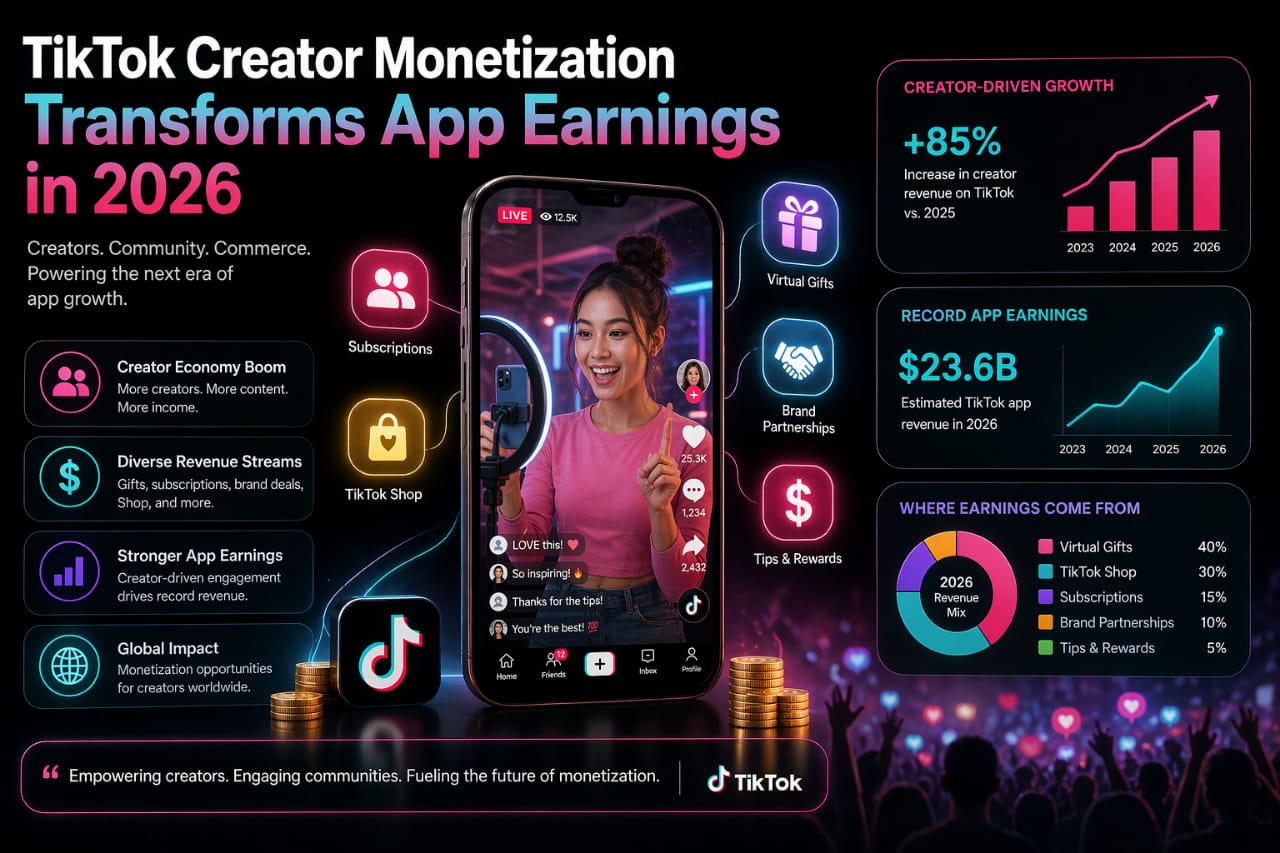
TikTok creator monetization is evolving rapidly in 2026, and it is reshaping how social media platforms reward digital creators across the globe. The TikTok creator monetization system is no longer limited to basic ad revenue sharing; rather, it now includes subscription tools, live gifting enhancements, and brand partnership integrations. Meanwhile, creators are adapting to multiple income streams instead of relying on a single payout model.
Growing competition from platforms such as Instagram Reels and YouTube Shorts has influenced TikTok’s creator monetization framework. Therefore, TikTok has expanded its monetization tools to retain top creators and encourage content consistency. In addition, regional monetization programs have been introduced to support creators in emerging markets.
However, this expansion has also introduced complexity. Consequently, creators must now understand multiple revenue layers, including performance-based payouts and audience-driven subscriptions. Meanwhile, platform analytics tools have become essential for tracking earnings across different monetization channels.
The TikTok creator monetization model is increasingly leaning toward subscription-based engagement features. Therefore, creators can now offer exclusive content to paying followers, which has significantly improved revenue predictability. In addition, this subscription layer helps reduce dependence on algorithm-driven visibility.
Meanwhile, users are showing willingness to pay for niche content from trusted creators. Consequently, micro-communities are becoming a strong driver of app engagement. However, this also creates pressure on creators to consistently deliver premium content.
The TikTok creator monetization shift toward subscriptions is also influencing content strategy. Therefore, creators are producing more structured content series rather than random viral clips. In addition, this shift is encouraging long-term audience retention instead of short-term engagement spikes.
The TikTok creator monetization ecosystem is heavily supported by brand partnerships, which have become more sophisticated in 2026. Meanwhile, brands are increasingly collaborating with mid-tier creators rather than only focusing on influencers with massive followings. Therefore, monetization opportunities have expanded across different creator tiers.
However, competition among creators for brand deals has also intensified. Consequently, content quality and audience trust are becoming critical factors in securing sponsorships. In addition, TikTok’s internal brand marketplace has streamlined collaboration between advertisers and creators.
The TikTok creator monetization system now integrates campaign performance tracking directly into creator dashboards. Therefore, creators can better understand which content formats generate the highest return. Meanwhile, brands benefit from more transparent performance metrics.
The TikTok creator monetization strategy is expanding aggressively in global markets, especially in Africa, Latin America, and Southeast Asia. Therefore, TikTok is localizing payment systems to support regional currencies and banking infrastructure. In addition, mobile wallet integration is increasing accessibility for creators in underbanked regions.
For example, creators in Nigeria and Indonesia are benefiting from improved payout systems that reduce transaction delays. Meanwhile, regional creator funds are supporting emerging talent development. Consequently, the global creator economy is becoming more inclusive.
However, regional disparities still exist in monetization rates. Therefore, creators in some markets earn significantly less per engagement compared to others. In addition, platform policy differences contribute to uneven revenue distribution.
The TikTok creator monetization model is facing increasing competition from other social platforms. Therefore, companies like Meta and Google are aggressively improving their creator payout structures. Meanwhile, platforms are competing not only for users but also for creator loyalty.
However, TikTok maintains an advantage in short-form content discovery. Consequently, creators still prioritize TikTok for viral reach, even if they diversify monetization elsewhere. In addition, cross-platform content strategies are becoming standard practice.
The TikTok creator monetization environment is also influencing app development trends. Therefore, new apps are being built specifically to support creator monetization analytics and audience management tools. Meanwhile, third-party platforms are integrating with TikTok APIs to enhance creator workflows.
The TikTok creator monetization system is expected to continue evolving toward deeper personalization and diversified revenue streams. Therefore, creators may soon have access to more dynamic pricing models for exclusive content. In addition, audience segmentation tools will likely become more advanced.
However, platform dependency remains a concern. Consequently, creators are increasingly building independent audiences outside of any single app ecosystem. Meanwhile, regulatory scrutiny around creator earnings transparency is likely to increase.
As a result, the TikTok creator monetization landscape will continue to shift toward a more balanced ecosystem where creators, platforms, and advertisers share value more evenly. Therefore, long-term sustainability will depend on fair revenue distribution and continued innovation in monetization tools.


