
Table of Contents
There are events that happen once a year and quietly fade after the lights go off. Then there are the ones that grow legs.
Blockfest Africa seems to be the latter.
After building a reputation as one of the continent’s emerging gatherings for blockchain and Web3 conversations, the organisers are now taking a bigger step. For its 2026 edition, Blockfest Africa is expanding beyond its original base and heading into South Africa.
It’s a move that says a lot, not just about the event itself, but about where Africa’s digital asset and blockchain ecosystem is heading.
Why South Africa, and why now?
On paper, South Africa makes sense. It has one of the continent’s most mature financial systems, a relatively clear regulatory environment for crypto, and a growing base of developers and startups building in Web3.
But this expansion feels less like a safe choice and more like a strategic one.
Africa’s blockchain ecosystem is no longer concentrated in a single market. Nigeria may dominate in terms of adoption and retail usage, but innovation is spreading. From Nairobi’s developer communities to Cape Town’s fintech scene, the map is becoming more distributed.
By moving into South Africa, Blockfest is positioning itself closer to that shift.
From event to ecosystem builder
What started as a conference is slowly becoming something more layered.
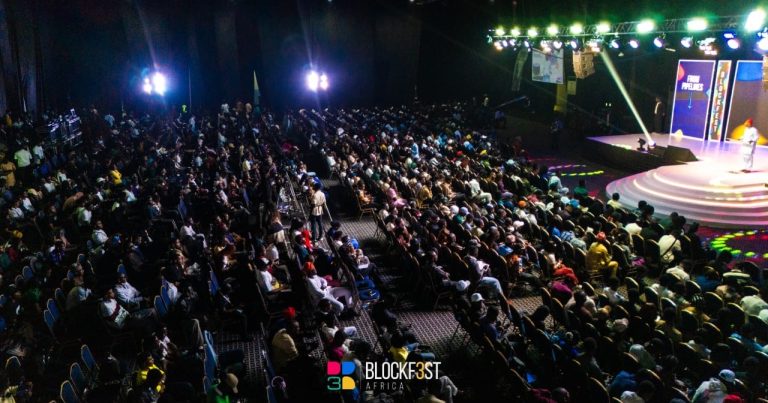
Blockfest Africa has evolved into a space where founders, investors, developers, and regulators can meet without the usual formal barriers. It’s less about polished presentations and more about real conversations—the kind that often happen in hallways rather than on stage.
Expanding into another major market suggests the organisers are thinking beyond a single annual event. They are building a cross-border platform.
And that matters, because Web3 itself doesn’t respect borders. The communities building in this space are already global by default.
The bigger picture: Africa’s Web3 momentum
Zoom out a little and the timing becomes clearer.
Africa’s blockchain story has moved past early curiosity. Stablecoins are being used for cross-border payments. Crypto is filling gaps in remittances and treasury management. Developers are building infrastructure, not just trading tokens.
At the same time, regulators across the continent are starting to pay closer attention. Some are cautious. Others are experimenting. Either way, the conversation is becoming more structured.
Events like Blockfest Africa sit right at that intersection. They create a space where innovation and regulation can actually meet, even if they don’t always agree.
What expansion could unlock
Taking the event to South Africa opens up a different layer of opportunity.
For one, it brings in a new set of institutional players—banks, regulators, and enterprise companies that are more deeply integrated into global financial systems.
It also gives startups exposure to a broader investor base. South Africa’s venture and private capital networks operate differently from West Africa’s, and that diversity can be valuable for founders looking to scale.
Then there’s the talent angle. The developer ecosystem in Southern Africa is growing quickly, and connecting it with other parts of the continent could accelerate collaboration in ways that are hard to replicate online.
The challenge of scaling a community
Of course, expansion is never just upside.
What makes Blockfest Africa work in one location may not automatically translate to another. Communities are local. Culture matters. Even the way people engage with technology can vary significantly between markets.
There’s also the risk of dilution. As events grow, they sometimes lose the intimacy that made them valuable in the first place.
The organisers will need to strike a balance—scaling the platform without flattening the experience.
A signal, not just a move
It’s easy to look at this as just another event announcement. But it feels like more than that.
Blockfest Africa’s expansion is a signal. One that reflects a broader shift in how Africa’s tech ecosystem is evolving.
The continent is moving from isolated hubs to a more connected network of innovation. Ideas, capital, and talent are starting to flow more freely across borders, even if infrastructure and regulation are still catching up.
What to watch next
The 2026 edition will be telling.
Not just in terms of attendance or headline speakers, but in the kind of conversations that emerge. Will it attract deeper institutional participation? Will it bridge gaps between different regions? Will it create partnerships that outlast the event itself?
Those are the real indicators of impact.
Because in the end, the value of gatherings like Blockfest Africa isn’t measured by the size of the crowd. It’s measured by what happens after everyone goes home.
And if this expansion works, it might quietly become one of the connectors shaping Africa’s Web3 future.


