
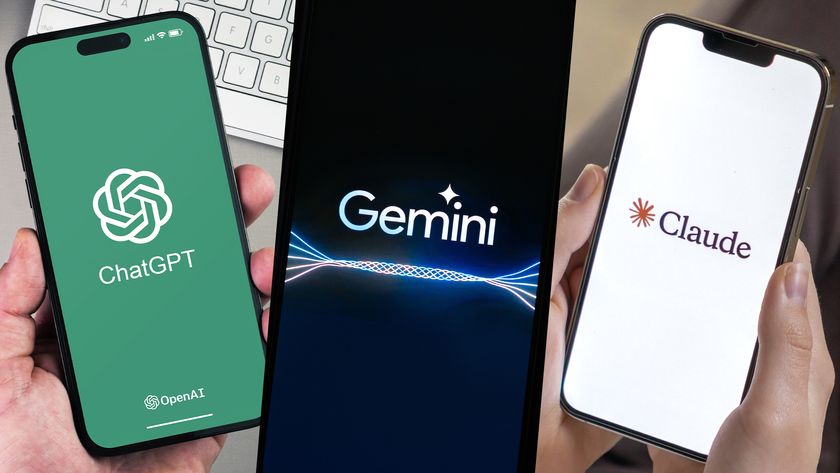
The rise of AI assistant apps has reached a defining moment in April 2026, as the world’s biggest technology companies aggressively expand their AI ecosystems across mobile and desktop environments. What began as chat-based interfaces has now evolved into full operating system companions, capable of managing workflows, automating tasks, and integrating deeply into productivity stacks. In this new phase of competition, AI assistant apps are no longer optional utilities but core infrastructure for digital life.
Google’s recent rollout of the Gemini Mac desktop app marks a significant shift in how AI embeds into operating systems. Unlike earlier browser-based assistants, the Gemini Mac experience works as a native layer that interacts with files, apps, and system-level functions. This move places Google directly against OpenAI’s ChatGPT desktop suite, Anthropic’s Claude ecosystem, and Microsoft’s deeply integrated Copilot stack. As a result, the definition of AI assistant apps is expanding beyond chat into persistent, cross-device intelligence.
Meanwhile, OpenAI’s ChatGPT continues to dominate consumer mindshare with its mature mobile experience and rapidly evolving agent capabilities. Microsoft Copilot, on the other hand, benefits from its enterprise-first integration across Windows, Office, and Azure-powered services. Anthropic’s Claude is quietly gaining traction in professional environments where long-context reasoning and document analysis matter most. Across all four ecosystems, AI assistant apps are converging toward the same goal: becoming the default interface for computing.
The competitive intensity between ChatGPT, Gemini, Claude, and Copilot reflects a deeper transformation in computing. Traditional app categories are being absorbed into conversational interfaces. File management, scheduling, research, coding, and media consumption are increasingly handled by agents rather than standalone applications. Consequently, AI assistant apps are reshaping how users perceive operating systems themselves.
Google’s Gemini Mac app launch is particularly important because it signals a departure from browser dependency. Conversational interfaces are absorbing traditional app categories. File management, scheduling, research, coding, and media consumption now increasingly rely on agents instead of standalone applications. It can summarize documents, assist in coding environments, and even trigger system actions. This positions Google’s ecosystem as a serious challenger to Microsoft’s longstanding desktop dominance.
OpenAI’s ChatGPT ecosystem, however, remains the most widely adopted consumer AI platform. Its mobile app continues to dominate global download charts, and its agent-based updates introduced earlier in 2026 have significantly expanded its utility. Users now rely on ChatGPT for multi-step workflows such as travel planning, document generation, and creative production. These developments reinforce the dominance of AI assistant apps as essential tools rather than experimental products.
Anthropic’s Claude strategy differs by focusing on reliability, safety, and deep reasoning. Its enterprise adoption has increased due to its ability to handle large documents and maintain contextual accuracy over long interactions. While it lacks the consumer virality of ChatGPT, Claude’s integration into enterprise SaaS tools is steadily increasing. This quiet expansion contributes to the broader growth of AI assistant apps in regulated industries.
Microsoft Copilot continues to leverage its integration advantage. Windows 12 ecosystems now embed Copilot into system-level navigation. As a result, users increasingly access AI assistance without needing separate apps. This frictionless model gives Microsoft a structural advantage in desktop environments, even as competition intensifies in mobile ecosystems. As a result, AI assistant apps are no longer competing only on intelligence but also on distribution control.
One of the most significant trends in 2026 is the collapse of boundaries between mobile and desktop AI systems. Users expect continuity across devices, and companies are responding with synchronized agent architectures. ChatGPT’s memory system, Gemini’s contextual OS integration, Claude’s document persistence, and Copilot’s enterprise syncing all point toward the same trajectory.
This convergence is redefining what users expect from AI assistant apps. Instead of opening multiple productivity tools, users increasingly rely on a single AI layer that orchestrates tasks across services. This shift is also impacting app stores, where traditional productivity apps are losing visibility to AI-first platforms that bundle multiple functions.
Apple’s App Store ranking trends show growing volatility, with AI assistant apps consistently occupying top positions. However, interesting anomalies persist. For example, utility apps such as remote media controllers and niche productivity tools continue to spike unexpectedly, indicating that user behavior is not fully consolidated around AI ecosystems.
For deeper coverage of these shifts, readers can explore TechChora’s AI tool breakdowns and startup app coverage sections, which track emerging competition in real time.
The battle between ChatGPT, Gemini, Claude, and Copilot is ultimately a battle for platform control. Whoever becomes the default assistant gains influence over user intent, data flow, and software interaction patterns. This is why companies are aggressively investing in desktop integration and mobile-first experiences.
Google’s Gemini strategy emphasizes cross-product integration across Search, Android, and Workspace. OpenAI focuses on neutral platform accessibility, aiming to be present everywhere regardless of device. Microsoft prioritizes enterprise dominance through Office and Windows integration, while Anthropic builds trust-based adoption in sensitive workflows.
In this context, AI assistant apps are evolving into operating system replacements in certain scenarios. Users increasingly perform tasks without opening traditional applications, relying instead on conversational commands and autonomous agents.
Looking ahead, the competition is expected to intensify further as agentic capabilities mature. AI systems will not only respond but also execute complex workflows autonomously. This raises questions about app store relevance, developer ecosystems, and monetization models.
The next phase of AI assistant apps will likely involve deeper personalization, persistent memory across years of usage, and tighter integration with real-world services such as payments, travel, and IoT systems. Companies that fail to adapt to this agent-driven paradigm risk losing relevance in both mobile and desktop markets.
For ongoing analysis, TechChora’s AI app comparisons and emerging startup coverage continue to track how these ecosystems evolve.
As the AI assistant landscape matures, one outcome is becoming increasingly clear: the future of computing will not be defined by apps, but by assistants that control them.


