
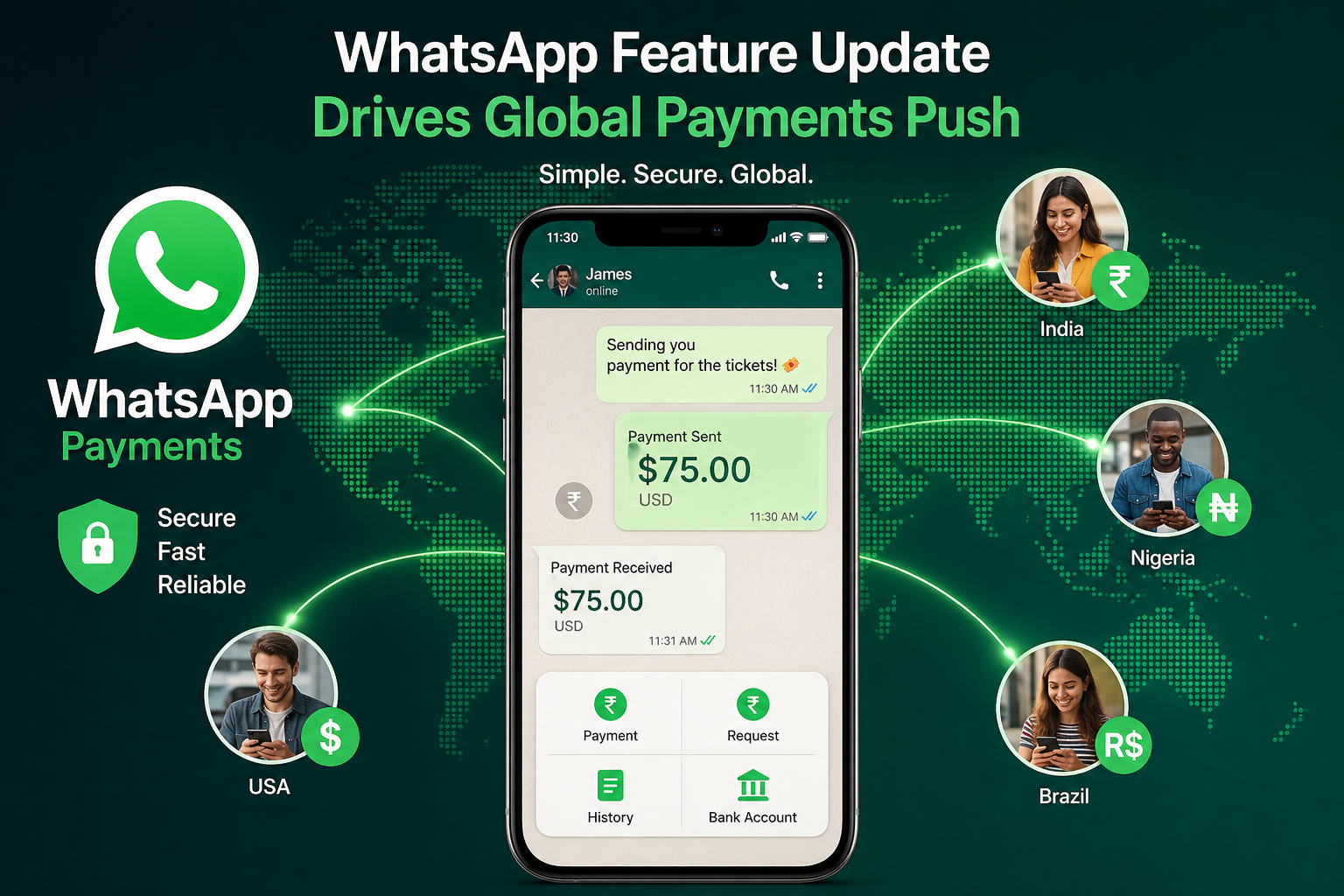
The WhatsApp feature update released in 2026 is transforming the app from a messaging service into a full-scale digital platform. This shift reflects Meta’s broader strategy to compete with fintech apps and super apps emerging in Asia and beyond. However, the transition is complex, as regulatory and user trust challenges remain significant.
At the core of the WhatsApp feature update is a major expansion of in-app payments. Users can now send money, pay businesses, and manage transactions directly within chats. Consequently, WhatsApp is positioning itself as a serious competitor to fintech platforms.
Partnerships are playing a key role. For example, integrations with Stripe and PayPal are enabling seamless payment experiences. Meanwhile, local partnerships in markets like India and Brazil are driving adoption.
However, regulatory hurdles persist. Governments are closely monitoring digital payments, and therefore, compliance requirements vary by region. As a result, WhatsApp’s rollout strategy is highly localized.
The WhatsApp feature update also introduces advanced business tools. Small and medium-sized enterprises can now create storefronts, manage orders, and communicate with customers within the app. Consequently, WhatsApp is becoming a critical platform for digital commerce.
Meta is monetizing these features through service fees and premium tools. Meanwhile, businesses benefit from direct customer engagement without relying on third-party platforms. As a result, the value proposition is strong for both sides.
In addition, integration with Shopify allows businesses to sync inventory and manage sales efficiently. However, competition from other platforms remains intense.
The WhatsApp feature update positions the app against super apps like those in Asia. However, Western markets have different user behaviors, and therefore, adoption may take time.
Meanwhile, competitors such as TikTok and Uber are also expanding app functionalities. TikTok is integrating shopping features, while Uber continues to diversify services.
As a result, the app ecosystem is becoming increasingly interconnected. Users expect multiple services within a single app, and therefore, companies are racing to meet these expectations.
Security is a critical aspect of the WhatsApp feature update. End-to-end encryption remains a core feature, but payments introduce new risks. Consequently, WhatsApp is investing heavily in fraud detection and user verification.
However, trust is not guaranteed. Users may hesitate to adopt financial features within a messaging app. Therefore, clear communication and robust security measures are essential.
In addition, regulatory scrutiny is increasing. Governments are concerned about data privacy and financial transparency. As a result, compliance will be a continuous challenge.
WhatsApp is also expanding its developer ecosystem. APIs now allow businesses to integrate services directly into the app. Consequently, third-party developers can build innovative solutions on top of WhatsApp’s platform.
This approach mirrors strategies used by other platforms. Meanwhile, developers benefit from access to a massive user base. As a result, the ecosystem is likely to grow rapidly.
However, competition for developer attention is fierce. Platforms like Google and Apple continue to dominate app distribution. Therefore, WhatsApp must offer compelling incentives.
User behavior is shifting in response to the WhatsApp feature update. In emerging markets, adoption of in-app payments is accelerating. Meanwhile, developed markets show slower uptake but strong interest in business features.
As a result, WhatsApp’s growth strategy is highly segmented. Different regions require different approaches. Therefore, localization is a key priority.
In addition, younger users are driving adoption of new features. They are more comfortable with digital payments and integrated services. Consequently, WhatsApp is targeting this demographic with tailored offerings.
The WhatsApp feature update signals a broader shift in the messaging app landscape. Messaging apps are evolving into multifunctional platforms that combine communication, commerce, and finance.
However, success is not guaranteed. Competition is intense, and user expectations are high. Therefore, continuous innovation is essential.
Meanwhile, regulatory frameworks will shape the future. Governments are increasingly involved in digital ecosystems. As a result, companies must navigate complex legal environments.
Ultimately, WhatsApp’s transformation reflects a larger trend. Apps are no longer standalone tools but integrated ecosystems. Consequently, the boundaries between social media, fintech, and e-commerce are blurring.
Read more on TechChora.com about messaging app monetization, fintech integrations, and the evolving global app economy.


