
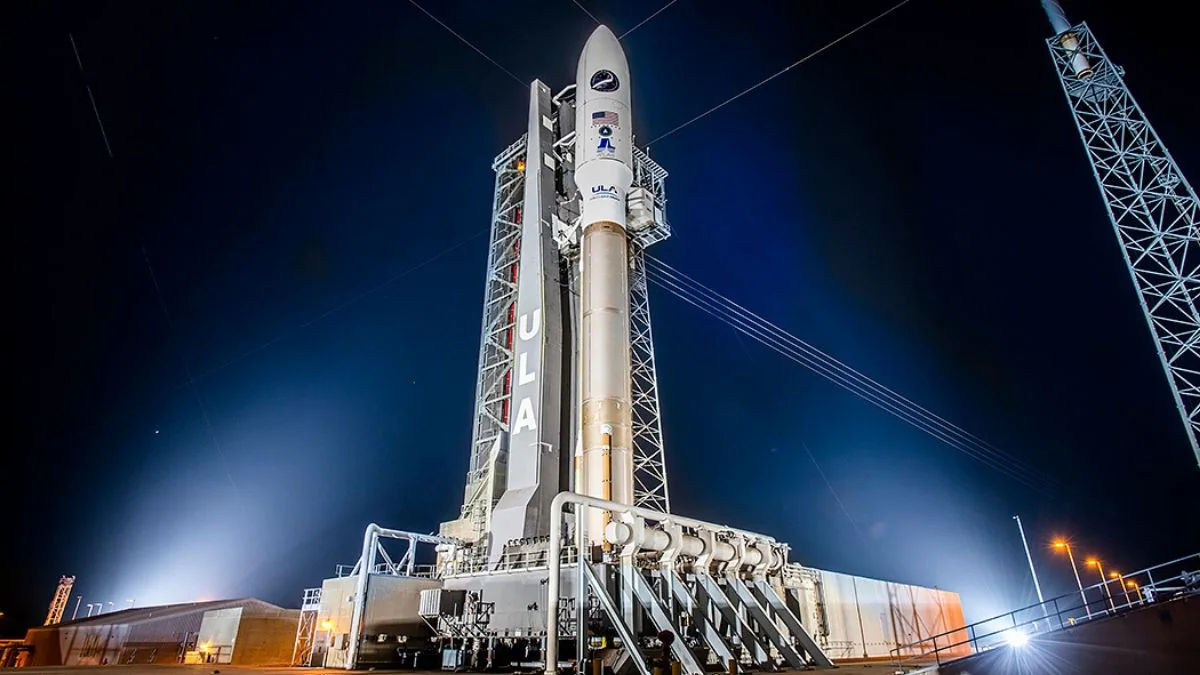
The latest Starship launch update from SpaceX signals a decisive shift in how humanity approaches deep space missions. As of April 2026, the program has entered a more mature testing phase, with iterative improvements shaping a vehicle designed for full reusability. This Starship launch update highlights not just a rocket, but a system intended to redefine the economics of space.
Recent test flights have focused heavily on orbital reliability and reentry performance. Unlike earlier prototypes, the newest Starship variants demonstrate improved thermal protection systems and enhanced engine redundancy. As a result, mission planners now see a clearer pathway toward consistent orbital deployment.
Meanwhile, collaboration with NASA continues to anchor Starship’s role in the Artemis program. The human landing system variant remains central to upcoming lunar missions. Therefore, each Starship launch update directly influences timelines for returning astronauts to the Moon.
The propulsion architecture also deserves attention. Powered by Raptor engines, Starship relies on methane and liquid oxygen, a combination that supports in-situ resource utilization on Mars. This detail is not trivial. It means future missions could produce fuel on other planets, drastically reducing logistical complexity.
In addition, Starship’s payload capacity exceeds that of any currently operational rocket. This capability allows for large satellite constellations, deep-space probes, and even modular space station components. Consequently, commercial and scientific stakeholders are watching every Starship launch update closely.
Private sector demand is rising quickly. Companies planning megaconstellations see Starship as a cost-effective deployment solution. At the same time, governments view it as strategic infrastructure. This dual-use dynamic amplifies its importance across both commercial and geopolitical domains.
However, challenges remain. Regulatory scrutiny from agencies such as the Federal Aviation Administration continues to shape launch cadence. Environmental concerns and safety reviews can delay operations. Nevertheless, SpaceX has adapted by refining its testing protocols and infrastructure.
The Starbase facility in Texas has evolved into a high-frequency test site. Rapid prototyping allows engineers to implement design changes quickly. As a result, each Starship launch update reflects tangible progress rather than theoretical improvements.
Meanwhile, global competitors are not standing still. China’s China National Space Administration is advancing its own heavy-lift capabilities. Similarly, Europe is investing in next-generation launch systems through European Space Agency initiatives. This competitive landscape adds urgency to every Starship milestone.
Beyond launches, Starship’s long-term vision includes interplanetary transport. Missions to Mars remain a core objective. While timelines are still fluid, the technological foundation is steadily forming. Therefore, each Starship launch update is effectively a step toward multi-planetary capability.
Economic implications are equally significant. Lower launch costs could unlock entirely new industries. Space-based manufacturing, tourism, and resource extraction become more feasible under this model. In addition, satellite deployment costs may decrease, expanding global connectivity.
For readers following TechChora.com, it is worth revisiting previous coverage on reusable rocket technology and satellite megaconstellations. These topics provide essential context for understanding why the Starship launch update matters beyond a single company.
The scientific community also benefits. Larger payloads enable more ambitious missions. Telescopes, planetary probes, and research modules can be launched with fewer constraints. As a result, discoveries in astrophysics and planetary science may accelerate.
Public interest remains high. Starship captures imagination in a way few aerospace projects do. Its scale, ambition, and visibility make it a focal point for discussions about humanity’s future in space.
Meanwhile, infrastructure development continues behind the scenes. Ground support systems, launch towers, and recovery operations are evolving in parallel. These elements are critical for achieving true reusability.
Another key factor is reliability. Frequent launches will only be viable if systems perform consistently. Therefore, each Starship launch update increasingly emphasizes data on flight stability and recovery success.
Looking ahead, integration with lunar missions will be the next major milestone. The Artemis program depends on Starship for crewed landings. Any delays or breakthroughs will ripple across the broader space industry.
In conclusion, this Starship launch update represents more than incremental progress. It reflects a transformation in how space missions are designed, funded, and executed. As competition intensifies and technology matures, Starship stands at the center of a new era in aerospace.
Readers should continue tracking updates closely. The pace of change is accelerating, and each development carries implications for science, business, and global strategy.


