
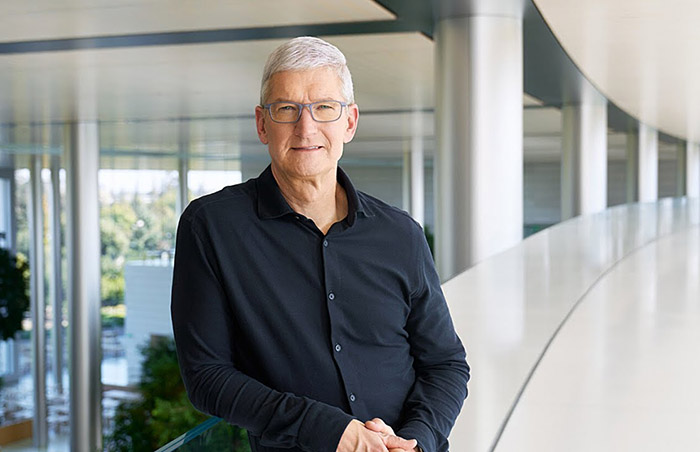
The Tim Cook strategy shift has become a defining narrative in how Apple is navigating its next phase of growth. However, this shift is not abrupt, but rather a gradual recalibration of priorities that has been unfolding over multiple product cycles and earnings seasons.
Analysts have long associated the leadership of Apple under Tim Cook with operational excellence and supply chain mastery. However, recent disclosures and investor briefings indicate that Tim Cook is increasingly shifting Apple’s strategy toward balancing hardware maturity with services expansion. Meanwhile, Apple’s revenue diversification continues to gain importance as global hardware markets become more saturated.
Therefore, the Tim Cook strategy shift reflects not just internal company evolution but also broader market pressures. In addition, investors are closely watching how Apple positions itself in subscription ecosystems, digital services, and integrated user experiences.
The company’s latest earnings commentary indicates that services growth remains a key pillar of long-term strategy. Consequently, this reinforces the idea that Tim Cook is shifting Apple’s strategy toward recurring revenue stability rather than purely device-driven expansion.
Apple’s leadership decisions under Tim Cook are also increasingly shaped by global regulatory scrutiny. For example, ongoing discussions in multiple jurisdictions about platform competition and app distribution models have forced Apple to adapt its ecosystem policies. Meanwhile, these regulatory pressures are indirectly influencing the Tim Cook strategy shift by requiring more openness in certain areas of the platform.
In addition, supply chain diversification continues to play a critical role. Apple’s gradual expansion of manufacturing partnerships outside traditional regions reflects a broader resilience strategy. Therefore, the Tim Cook strategy shift is not only about product innovation but also geopolitical risk management.
Market analysts have noted that Apple’s product cadence remains stable. However, the internal prioritization of categories appears to be evolving. For instance, wearable technology and services integration are receiving increased strategic attention. Meanwhile, legacy product categories are being optimized for longer lifecycle profitability rather than aggressive iteration.
The Tim Cook strategy shift is also visible in Apple’s approach to capital allocation. As a result, shareholder returns through buybacks and dividends remain significant, but there is also increasing investment in content ecosystems and service infrastructure.
Furthermore, Apple’s leadership team structure continues to reflect Cook’s operational philosophy. Senior executives maintain strong autonomy in product categories, however strategic alignment remains tightly centralized. Consequently, this hybrid leadership model reinforces stability while enabling gradual transformation.
The global tech industry is responding carefully to the Tim Cook strategy shift. Competitors are adjusting their own service ecosystems, while hardware manufacturers are reassessing premium positioning strategies. Meanwhile, developers and platform partners are adapting to Apple’s evolving ecosystem rules.
From an investor perspective, the Tim Cook strategy shift is generally seen as low-risk but high-stability. Therefore, Apple continues to attract long-term institutional confidence even amid slower innovation cycles compared to earlier eras.
However, challenges remain. For example, market saturation in premium smartphones limits growth potential. In addition, regulatory constraints may reshape platform economics over time. Consequently, Apple’s leadership must balance innovation with compliance and profitability.
The Tim Cook strategy shift also has implications for future leadership succession planning. Although Apple has not signaled immediate changes, governance structures and executive depth suggest long-term continuity planning is already in place.
In conclusion, the Tim Cook strategy shift represents a controlled evolution rather than disruption. Meanwhile, Apple’s strategic direction continues to emphasize ecosystem strength, service monetization, and global operational resilience.
Readers can explore more on TechChora.com about leadership changes in global tech firms and how executive decisions shape industry direction.


