The Sports Industry Has Become a Technology Industry
Analysts valued the global sports technology market at $22.86 billion in 2025 and project it will reach $60.49 billion by 2030, growing 21.49% annually. That growth rate is comparable to cloud computing in 2012 or mobile internet in 2010. Sports is not on the periphery of the technology industry. It is one of the fastest-growing technology markets in the world. Moreover, the changes in professional leagues and elite training programs are just beginning to reach amateur athletes, youth programs, and the billions of fans who follow sports as their main form of entertainment.
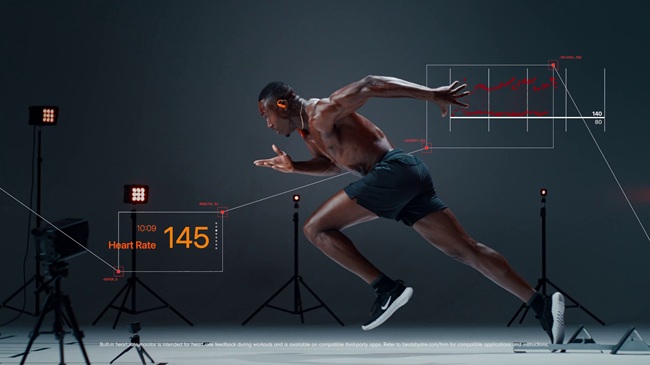
The technology driving this growth is AI. Not AI in the abstract sense of a vague enhancement, but AI as specific, deployable tools. For example, wearable sensors monitor athlete physiology in real time. Meanwhile, computer vision systems track every player movement 60 times per second. Additionally, machine learning models predict injury risk with clinically meaningful accuracy, and agentic systems give coaches real-time tactical recommendations during live games.
Wearables Are the Hardware Layer of Modern Sport
The NBA launched three new public statistics in the 2025-26 season based entirely on player-tracking data that processes 29 data points per player, sampled 60 times per second. A defensive box score. Shot-difficulty metrics that account for defender proximity, shot angle, and game context. And player-on-court gravity mapping that quantifies how much an offensive player’s presence affects defensive positioning even when they do not have the ball.
These statistics exist because every NBA arena now runs an overhead tracking system that captures the precise position of every player and the ball continuously throughout a game. The data generated by a single NBA game exceeds what entire statistical departments processed in a season 20 years ago.
WHOOP, whose wrist-worn sensor measures heart rate variability, sleep quality, respiratory rate, and physical strain, has become the standard recovery monitoring tool in professional sports globally. LeBron James, Cristiano Ronaldo, Rory McIlroy, and Kevin Durant have all been public about using WHOOP to guide their training and recovery decisions. The NBA’s most recent collective bargaining agreement explicitly states that athletes may choose to use wearable devices and that teams cannot use biometric data in contract negotiations. This protection reflects the demands players made as adoption of the technology became widespread.
Injury Prediction: The Most Commercially Valuable Application
Today, more than 50 professional clubs worldwide across the NFL, NBA, MLB, hockey, and European football use an AI platform that focuses specifically on injury prediction.The platform ingests biometric data from wearables, GPS tracking data from training sessions, game footage, and historical injury records to build individual risk models for each athlete.
The practical result is measurable. Teams that have implemented AI-based injury monitoring consistently report significant reductions in soft-tissue injuries, which are the most common and most preventable category of sports injury. One rugby organization credited its AI monitoring system with a 30% reduction in injury rates. The financial significance of this is substantial: a single serious injury to a star player can cost a franchise tens of millions of dollars in medical costs, roster adjustments, and competitive performance impact.
The NFL’s Digital Athlete program, developed in partnership with AWS, creates a virtual representation of each player by aggregating data from sensors across their protective equipment. The system models the biomechanical forces a player experiences during contact and identifies accumulating injury risk before physical symptoms appear. The practical application is giving athletic trainers data that supports earlier interventions, rest decisions, and load management strategies.
Computer Vision: The Coach That Never Blinks
Computer vision systems in 2026 can analyze the defensive alignment of an opposing team and calculate the expected value of every offensive action available to the team with the ball, in real time, faster than any human analyst could process the information. In basketball, AI systems track XY player coordinates and generate metrics like defensive impact, which quantifies how individual players affect scoring probability even when they are nowhere near the ball.
In soccer, AI and tracking data have fundamentally changed the analysis of team shape, pressing systems, and defensive organization. Coaches can now quantify how well their defensive line maintains its structure under pressure, how effectively their press is executed compared to the tactical design, and whether individual players are executing their positional responsibilities with the spatial precision the system requires.
For talent scouting, computer vision has opened markets that were previously inaccessible. AI systems that process game footage in any language can produce detailed performance summaries for players in lower leagues, smaller markets, and countries where traditional scouting infrastructure does not reach. One European club signed a teenage player based primarily on decision-making metrics identified by AI analysis of footage from a regional league, metrics that traditional scouts reviewing the same footage had not flagged.
AI Fan Engagement: Personalizing the Spectator Experience
The sports fan experience is being restructured by AI on every screen and in every stadium. The NBA’s partnership with Microsoft includes AI-generated highlight packages that are automatically assembled within seconds of key moments and delivered to fans through personalized content feeds. Rather than watching a generic highlight reel, a fan who has demonstrated a preference for three-point shooting from the corner will receive highlights curated for that specific pattern.
Amazon’s first live-streamed NBA game in October 2025 was accompanied by an AI-powered commentary overlay that provided real-time statistical context for every significant play. The system identified historical comparisons, surfaced relevant player career data, and flagged moments of statistical significance that a human commentator might not catch in real time. The production represents where broadcast sports is heading: AI as a data layer that enriches the viewing experience rather than replacing the human elements that fans value most.
The sports betting market, projected to grow from $10.8 billion in 2025 to over $60 billion by 2034, is one of the most intensive adopters of AI in sports. Machine learning models now predict game outcomes with 70 to 80% accuracy on well-characterized matchups, matching or exceeding the performance of the best human analysts. These models process biometric data, injury information, weather conditions, travel fatigue, and historical head-to-head records simultaneously.
Major League Baseball: The Tech Story Nobody Is Covering
MLB’s MLBPA has increased its war chest to $415 million ahead of a possible lockout, with one of the contested issues being the implementation of automated ball-strike technology, which uses a combination of radar, computer vision, and a precisely mapped three-dimensional strike zone to call balls and strikes with machine accuracy. The technology made its MLB debut this season after years of testing in the minor leagues.
Automated ball-strike technology represents the most significant change to umpiring in baseball’s modern history. It removes human judgment from the most consequential call in the game. Pitchers whose effectiveness depends on getting borderline calls in their favor, catchers whose pitch-framing skills have historically influenced umpires, and hitters whose plate discipline has been shaped by imperfect strike zone enforcement will all need to adapt to a system that calls the zone exactly as specified.
The technology’s adoption is part of a broader trend: AI is being used not just to analyze sports but to officiate them, with implications for how the rules of competition are defined, monitored, and enforced.
The Democratization of High-Performance Tools
What was elite-level sports technology five years ago is accessible to amateur athletes today. AI coaching apps that analyze running form from smartphone video are available for free. Affordable heart rate variability sensors that provide recovery scoring comparable to professional-grade wearables are available for under $100. AI-powered performance analytics platforms designed for youth sports programs are being adopted by high school athletic departments that previously had no analytics infrastructure at all.
The global sports technology market valued at $60 billion by 2030 is not just elite professional sports. It is the full pyramid of athletic participation, from Olympic programs to recreational leagues to individual athletes trying to run their next marathon in a faster time. Technology is compressing the gap between what elite athletes know about their bodies and what everyone else has access to.
What Comes Next
The near-term frontier in sports technology is real-time tactical AI that operates during live competition. Systems that can analyze an evolving game situation, model the likely outcomes of different coaching decisions, and present recommendations in a format that coaches can act on within the seconds available to them. The technology exists. The interface challenge, how to present probabilistic recommendations to coaches under game pressure without disrupting their decision-making process, is the problem the best sports technology companies are working on now.
The further horizon is digital twins of individual athletes, comprehensive simulations of how a specific person’s body responds to training, competition, and recovery that are accurate enough to use for individualized performance planning. Several teams in European football and the NBA are already piloting early versions of athlete digital twins. Within three to five years, they may be standard infrastructure for every professional sports organization in the world.
Be the first to comment