
The Armata tank remains essentially nonexistent in real service, and the Su‑57 stays as far away from Ukraine as possible. But apparently not far enough.

On May 1, the Ukrainian General Staff announced that on April 25 it had struck possibly two Russian Su‑57s and one Su‑34 aircraft. These are among the most expensive assets in Russian military aviation. The Su‑57 is often estimated at $35–50 million, though the real figure may be much higher, especially considering that the Su‑34 is believed to cost around $50 million. But Russia’s biggest loss here is not financial.
The strike took place at the Chkalov air base in the Chelyabinsk region, roughly 1,700 km from Ukraine. Satellite images confirm that the base was hit, although the exact extent of the damage is difficult to assess. The implications are still significant, though.
Long‑range Ukrainian drone strikes are becoming a serious concern for Russia. This year, there will be no ground equipment at the traditional Victory Day parade in Moscow. Normally, .
And this is where the real damage lies: the understanding that Ukrainian drones can penetrate Russian air‑defence space far deeper than previously assumed. Even if these aircraft in Chelyabinsk were only lightly damaged, the psychological and strategic effect is substantial. Russia now has to consider that no base is truly out of reach for Ukrainian long-range weaponry.
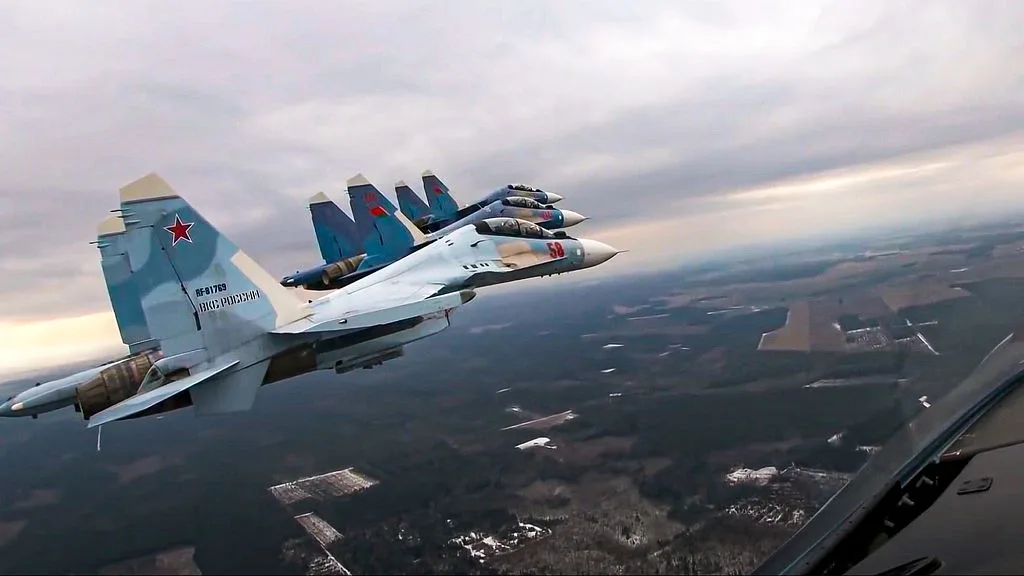
As for the aircraft themselves, the Su‑57 is a fifth‑generation twin‑engine stealth fighter jet. Its maiden flight took place in 2010, and it officially entered service in 2020. The aircraft is just a hair longer than 20 meters with a wingspan of a little more than 14 meters. At high altitude, it can reach speeds of around Mach 2, and it can allegedly climb to roughly 18.8 km. It can carry up to 7.5 tonnes of weapons, much of it in internal bays to preserve its stealth profile.

Read More: Do I Have to Keep My Laptop Always Plugged In to Keep the Battery Charged 100%?
The Su‑34 is not a fifth‑generation aircraft and not stealthy, but it is still a modern and capable platform. It is a two‑seat, twin‑engine fighter‑bomber that has been in service since 2014. It measures 23.34 meters in length, has a wingspan of 14.7 meters, and can carry up to 14 tonnes of ordnance.
According to the open‑source intelligence project Oryx, this would be the second Su‑57 damaged during the war and at least the 44th lost (or damaged) Su‑34. However, satellite images alone cannot reveal the full extent of the damage. Ukrainian sources believe that as many as two Su‑57s and one Su‑34 may have been hit, but are they completely lost – no one can tell for now.


