
Table of Contents
On an April evening in Lagos, the mood wasn’t exactly celebratory. It was curious. Slightly cautious. You could feel it in the conversations before the programme even began.
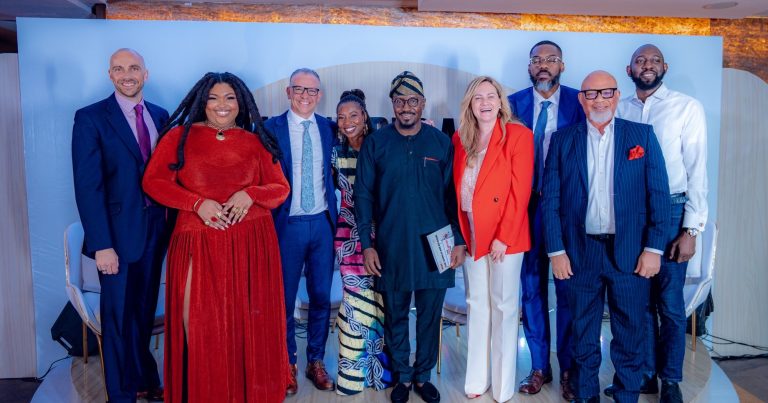
The launch of The World Ahead 2026 brought together policymakers, business leaders, and thinkers, not just to talk about what comes next, but to quietly wrestle with a bigger question: how much of Nigeria’s future will be shaped internally, and how much will still depend on external forces?
Held at the Sky Lounge of Eko Hotel & Suites, the event marked the fifth consecutive year the globally recognised publication has been brought to Lagos by CT Productions. But this year felt different. Less about prediction. More about ownership.
A year of uncertainty, but not without direction
Tom Standage, Deputy Editor of The Economist and Editor of The World Ahead, didn’t try to sugarcoat things. He described 2026 as a year filled with uncertainty. Still, not the kind that leaves you stuck. The kind that reveals direction if you’re paying attention.
That framing set the tone for the evening. Not doom and gloom. Not blind optimism either. Something more grounded.
On Africa, the message was even sharper. The continent, and by extension Nigeria, can no longer afford to outsource its priorities. The next phase will be defined locally, whether institutions are ready or not.
It’s a subtle shift, but an important one. For years, global narratives have shaped how Africa is positioned. Now the conversation is tilting toward self-definition.
Lagos is betting on resilience as strategy
When Lagos State Governor Babajide Sanwo-Olu took the stage, he leaned into a theme that kept resurfacing throughout the night: resilience.
But not in the usual, overused sense. Not as a buzzword. As a deliberate economic strategy.
His argument was simple. Governments that wait for the future tend to fall behind. The ones that prepare their people and institutions tend to shape it.
Lagos, according to him, is choosing the latter.
There was also a noticeable emphasis on sustainability, not as an environmental checkbox, but as part of economic competitiveness. That framing matters. It suggests a shift from reactive policy to something more intentional.
Agriculture, energy, and the foundation of growth
One of the more practical conversations came during a fireside chat with John Coumantaros, Chairman of Flour Mills of Nigeria.
Instead of broad economic theory, he focused on something tangible: agricultural productivity.
The idea of moving yields from two tonnes to five tonnes may sound technical, but the implication is huge. It’s the difference between subsistence and surplus. Between a rural economy that survives and one that generates real value.
His point was hard to ignore. No country builds lasting industrial strength without first getting agriculture right.
That same grounded thinking showed up in the energy discussion panel. Speakers explored how improving gas infrastructure could reduce costs and shield Nigeria from global shocks.
There was also talk of waste recycling and local innovation, not as side projects, but as necessary parts of a more self-sustaining economy.
Culture is no longer a side story
If the first half of the event focused on hard infrastructure, the second half shifted to something less tangible but just as important: cultural capital.
A panel featuring leaders from education, media, and entrepreneurship highlighted the growing influence of Nigeria’s creative economy.
It’s easy to underestimate this sector because it doesn’t always show up neatly in GDP figures. But its impact is becoming harder to ignore.
From fashion to film to digital media, Nigeria’s cultural output is shaping perception, attracting investment, and creating entirely new markets.
The real challenge, as the panelists noted, is structure. Funding, education, and long-term support systems still lag behind the talent itself.
The role of media in shaping outcomes
One of the more reflective moments came from Camelia Oros Tsarouchis, Founder and Managing Director of CT Productions.
She spoke about the responsibility of media, not just to report what is happening, but to shape how it is understood.
That might sound abstract, but it’s not. Narratives influence decisions. They affect where capital flows, how policies are formed, and even how countries see themselves.
Her call for more honest, grounded storytelling felt like a quiet challenge to the ecosystem.
Because if the story is wrong, the strategy often follows.
Why this conversation matters now
Events like The World Ahead 2026 are easy to dismiss as talk shops. Panels, speeches, polished ideas.
But that would miss the point.
What makes this one relevant is timing. Nigeria is at a stage where the fundamentals are being questioned. Growth models. Energy systems. Talent pipelines. Even identity in the global economy.
The conversations happening in rooms like this often signal where attention, and eventually capital, will move next.
Looking ahead without illusions
There’s a temptation to look at the future as something distant. Something that arrives later.
But if there was one consistent thread throughout the evening, it was this: the future is already forming. Quietly. Through policy decisions, business strategies, and the choices institutions make today.
Nigeria’s outlook, as presented during The World Ahead 2026, is not defined by certainty. It’s defined by possibility, shaped by how deliberately those possibilities are pursued.
And maybe that’s the real takeaway.
Not whether the future will be favourable, but whether the country is prepared to build it on its own terms.


