
Table of Contents
The Week That Changed the Scale of Everything
The week of March 31 through April 4, 2026 will be remembered as one of the most consequential weeks in the history of the technology industry. OpenAI closed the largest venture round ever recorded. Oracle announced layoffs in the tens of thousands while simultaneously redirecting capital into AI infrastructure. Microsoft committed billions to a Japan AI and cybersecurity partnership. NASA launched humans to the Moon for the first time in 54 years. SpaceX filed for an IPO. And Anthropic accidentally published 500,000 lines of its core code to the public internet.
Here is what happened, why it matters, and what it means for the month ahead.
OpenAI Closes $122 Billion at an $852 Billion Valuation
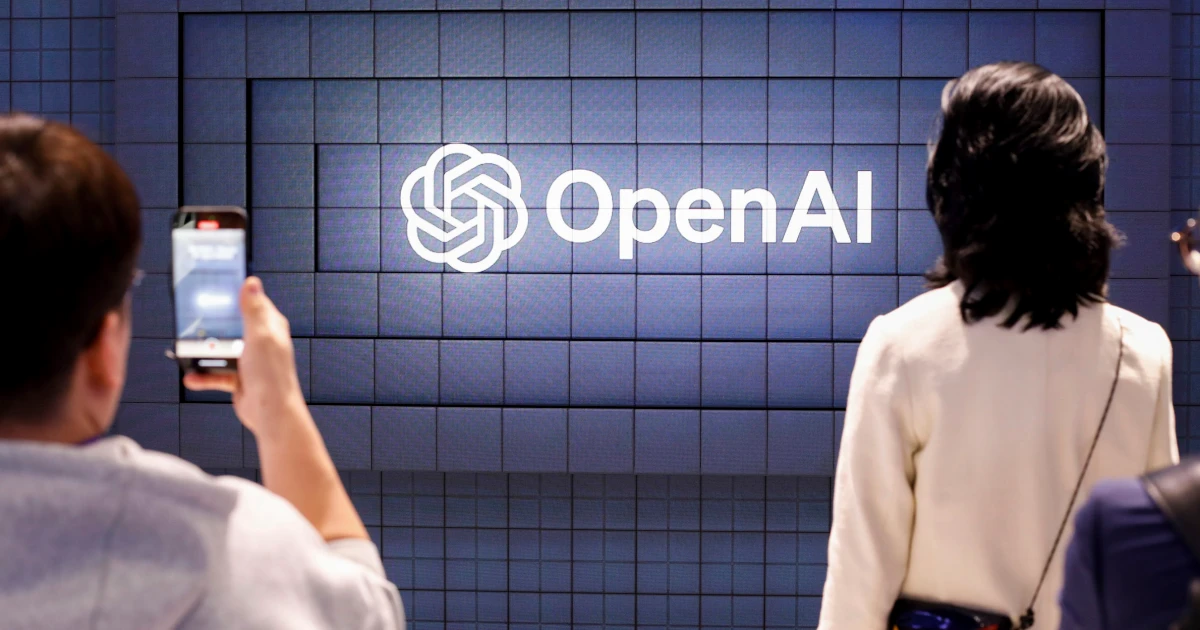
OpenAI completed the largest venture funding round in Silicon Valley’s history this week, raising $122 billion at a valuation of $852 billion. Amazon contributed $50 billion. Nvidia committed $30 billion. SoftBank added another $30 billion. The round was led by a consortium that, taken together, represents a bet that OpenAI becomes one of the most valuable companies in the world within the next three to five years.
The company reported $25 billion in annualized revenue at the end of February 2026. That is the same revenue milestone Google took 17 years to reach. ChatGPT now serves over 900 million weekly active users and 9 million paying business customers. OpenAI has publicly stated it is targeting a $1 trillion IPO as early as Q4 2026.
Oracle Cuts 20,000 to 30,000 Jobs
Oracle announced layoffs of an estimated 20,000 to 30,000 workers across the United States and India this week. The company is simultaneously investing aggressively in AI infrastructure and data center capacity. The pattern is now standard across enterprise tech: cut headcount in areas that AI tools can replace, redirect that capital into compute infrastructure that AI requires.
Oracle’s decision also made global news for a different reason. An Iranian military strike on an Oracle data center in Dubai this week caused disruptions to regional cloud services. The attack was a direct reminder that AI infrastructure is physical infrastructure, and that physical infrastructure has always been a target.
Microsoft Commits $10 Billion to Japan
Microsoft President Brad Smith met with Japanese Prime Minister Sanae Takaichi in Tokyo this week to announce a $10 billion investment in Japan between 2026 and 2029. The investment covers AI infrastructure expansion and deepened cybersecurity cooperation with the Japanese government.
The framing of the announcement was deliberate: this is not a cloud sales agreement. It is a national resilience investment. Japan’s government is treating AI infrastructure the same way it treats energy and defense capacity, as critical sovereign infrastructure. Microsoft is positioning itself as a partner in that framing across multiple markets, not just Japan.
OpenAI Acquires TBPN
OpenAI this week acquired TBPN, a tech-focused talk show that had become unusually influential in Silicon Valley despite a relatively small audience. According to the Wall Street Journal, TBPN generated approximately $5 million in advertising revenue in 2025 and was on track to exceed $30 million in 2026 before the deal closed.
The acquisition signals something more significant than a media play. OpenAI is investing in narrative control at a moment when public perception of AI safety, AI governance, and AI’s role in defense and surveillance is genuinely contested. Owning a credible media voice that operates inside the tech industry’s most influential conversations is a strategic asset.
Anthropic’s 500,000-Line Code Leak
On March 31, Anthropic accidentally published the full source code of Claude Code to the public npm registry. Nearly 2,000 files and 500,000 lines of code were publicly accessible before the company pulled them. Within hours, 16 million people had viewed the thread where a researcher posted a direct download link. A GitHub mirror of the code hit 50,000 stars in under two hours.
Anthropic confirmed no customer data or credentials were exposed and described the incident as a packaging error caused by a misconfigured debug file bundled into a routine update. The most significant discovery in the exposed code was the three-layer memory architecture Claude Code uses to manage context across long sessions, a design detail that explains how the tool handles the kind of sustained multi-file reasoning that short-context models cannot do reliably.
Separately, Anthropic is racing to contain the earlier leak of an internal blog post describing Claude Mythos, its next-generation model, and privately briefing government officials about its cybersecurity implications.
Tesla Delivers 358,023 Vehicles in Q1
Tesla reported first-quarter 2026 delivery figures of 358,023 vehicles, solid but unspectacular numbers that reflect a mature EV market dealing with softening demand and increased competition. The more relevant Tesla story for tech watchers is the company’s strategic shift: CEO Elon Musk has consistently stated that Tesla’s automotive division is becoming less central to the company’s long-term value than its AI, robotics, and energy infrastructure operations.
Amazon Adds 3.5% Fuel and Logistics Surcharge
Amazon notified sellers this week that it will add a 3.5% fuel and logistics surcharge to shipping costs as energy prices remain elevated. The move affects every seller on the Amazon Marketplace, which represents a significant portion of global e-commerce volume. For small and medium sellers already operating on thin margins, the surcharge creates immediate pricing pressure.
Chinese Chip Firms Hit Record Revenue
Chinese semiconductor companies reported record-high revenue in Q1 2026, driven by a combination of domestic AI demand and continued U.S. export restrictions. The restrictions, intended to limit China’s access to advanced chips, have accelerated domestic investment in chip design and fabrication. Huawei’s latest AI chip architecture has already attracted interest from major Chinese tech companies looking to reduce dependence on NVIDIA hardware.
The Bigger Picture
This week illustrates a pattern that has defined the first quarter of 2026: AI is not a single story. It is a force reshaping defense, finance, manufacturing, media, cybersecurity, national infrastructure strategy, and the economics of every knowledge-intensive industry simultaneously.
TechChora will continue to cover every dimension of this shift, from the funding rounds and policy decisions to the layoffs and the leaked code that tells you more about how the technology actually works than any press release ever will.


